
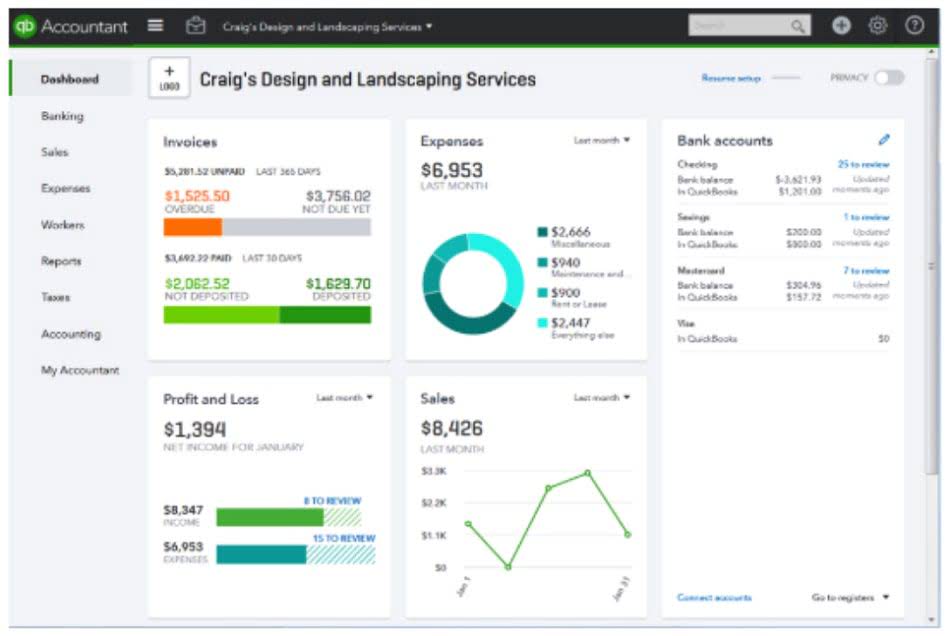
Written Down Value (WDV), Straight Line Technique (SLM) Company policy does not put any restrictions on the use of any method. The Income-tax Act mandates that only the WDV technique be used to determine depreciation, despite the fact that Companies often utilize SLM. When you select the Journal of Accountancy as a preferred source, you’ll start to see more of our articles prominently displayed when our content is relevant to your search. As these examples show, the DDB method can be particularly useful for depreciating assets that have a rapid decline in efficiency, effectiveness, QuickBooks or relevance. HighRadius is redefining treasury with AI-driven tools like LiveCube for predictive forecasting and no-code scenario building.
Get our FREE Tax Guide for Individuals

Whether you’re an accountant, financial analyst, or business owner, mastering these techniques enables better asset management, accurate financial reporting, and informed decision-making. In some cases, a business might switch from declining balance to straight-line when it yields higher expenses. Using the steps outlined above, let’s walk through an example of how to build a table that calculates the full depreciation schedule over the life of the asset. Let’s examine the steps that need to be taken to calculate this form of accelerated depreciation. Let us assume that we have a second-hand car valued at $40,000 with an estimated salvage value of $4,000.
Adjustments and Exceptions in DDB Calculation
There are four different depreciation methods used today, and I discuss these in the last section of my Beginner’s Guide to Depreciation. As you can see in the previous chart, the depreciation expense using the Double-declining method in year four was $864, so we have a winner! The Double Declining Balance Method, often referred to as the DDB method, is a commonly used accounting technique to calculate the depreciation of an asset. The carrying value of an asset decreases more quickly in its earlier years under the straight line depreciation compared to the double-declining method. The amount of final year depreciation will equal the difference between the book value of the laptop at the start of the accounting period ($218.75) and the asset’s salvage value ($200).
Best accounting software for calculating depreciation
In my experience, using the double declining balance method can help businesses manage their taxes effectively by allowing them to report lower profits in the early years of an asset’s life. The double declining balance depreciation method is a way to calculate how much an asset loses value over time. It’s called double declining because it uses a rate that is double the standard straight-line method.
Benefits of the Double Declining Balance Method
Net book value can be calculated by using the cost of fixed asst deducting its accumulated depreciation. Depreciation lets a company deduct an asset’s value decline, lowering taxable income. Its anticipated service life must be for more than one year and it must have a determinable useful life expectancy. This approach is reasonable when the utility of an asset is being consumed at a more rapid rate during the early part of its useful life.

Method 6 – Applying Units of Production Formula of Depreciation for Declining Balance
Sara wants to know the amounts of depreciation expense and asset value she needs to show in her financial statements prepared on 31 December each year if the double-declining method is used. In the accounting period in which an asset is acquired, the depreciation expense calculation needs to account for the fact that the asset has been available only for a part of the period (partial year). The following section explains the step-by-step process for calculating the depreciation expense in the first double declining balance method year, mid-years, and the asset’s final year.
To fully understand the Double Declining Balance (DDB) method, it’s essential to see how depreciation is calculated year by year with a practical example. In that case, only the excess of the depreciable base may be expensed for that year. In fact, as the name suggests, the DDB method results in a first-year depreciation expense of double the amount that could be expensed using the straight-line method. If you would like the name of the asset, or General Asset Account (GAA), included in the title of the depreciation schedule, enter the name in this field. By accelerating the depreciation Statement of Comprehensive Income and incurring a larger expense in earlier years and a smaller expense in later years, net income is deferred to later years, and taxes are pushed out. In this example, we’re going to see how it can help us calculate the depreciation value of an item, a car in this case, during its life.
- Suppose you have a company car that costs $100,000, has a useful life of 10 years, and a salvage value of $10,000.
- The term “double” in the double-declining balance depreciation comes from the determining of deprecation rate to be twice of the straight-line rate.
- Microsoft Excel, the go-to tool for data analysis and financial calculations, offers a plethora of functions designed to make complex tasks simpler.
- On top of that, it is worth it for small business owners, larger businesses and anyone owning a rental, to familiarize themselves with Section 179 depreciation and bonus depreciation.
- Proper implementation of DDB depreciation facilitates more accurate financial analysis and tax planning.
- Absolutely, you can switch from double-declining to straight-line depreciation in Excel, and it’s quite a smooth transition thanks to the VDB function.
After the first year, we apply the depreciation rate to the carrying value (cost minus accumulated depreciation) of the asset at the start of the period. In this lesson, I explain what this method is, how you can calculate the rate of double-declining depreciation, and the easiest way to calculate the depreciation expense. Typically, accountants switch from double declining to straight line in the year when the straight line method would depreciate more than double declining. For instance, in the fourth year of our example, you’d depreciate $2,592 using the double declining method, or $3,240 using straight line. When accountants use double declining appreciation, they track the accumulated depreciation—the total amount they’ve already appreciated—in their books, right beneath where the value of the asset is listed. If you’re calculating your own depreciation, you may want to do something similar, and include it as a note on your balance sheet.
Sum-of-the-Years’ Digits Method
If the double-declining depreciation rate is 40%, the straight-line rate of depreciation shall be its half, i.e., 20%. Double-declining depreciation charges lesser depreciation in the later years of an asset’s life. In the last year of an asset’s useful life, we make the asset’s net book value equal to its salvage or residual value. This is to ensure that we do not depreciate an asset below the amount we can recover by selling it. It is important to note that we apply the depreciation rate on the full cost rather than the depreciable cost (cost minus salvage value).
- Continuing with the same numbers as the example above, in year 1 the company would have depreciation of $480,000 under the accelerated approach, but only $240,000 under the normal declining balance approach.
- The function swiftly computes the depreciation expense for that period, reflecting the asset’s rapid value drop in the early stages.
- Double Declining Balance (DDB) is an accelerated depreciation method that allows for a larger portion of an asset’s cost to be depreciated in the early years of its life.
- For example, if the fixed asset’s useful life is 5 years, then the straight-line rate will be 20% per year.
- Enter the 4-digit year you would like the calculator to calculate the depreciation expense for.
- You can drag this formula down to period five without making any changes as long as you use absolute references.
Cons of the Double Declining Balance Method
The Double Declining Depreciation is one of the accelerated methods of calculating depreciation. Here, the depreciation percentage is a multiple of the straight-line depreciation. In this instance, we will calculate the Double Declining Depreciation in 2 ways. AI-powered accounting software can significantly streamline these depreciation calculations. By automating the complex calculations required for methods like DDB, AI ensures accuracy and saves valuable time. These tools can quickly adjust book values, generate detailed financial reports, and adapt to various depreciation methods as needed.